How MeshPoint tracked about 2,500 assets with Tags
This is a success story from MeshPoint, a GPS-Trace service provider from Israel.

MeshPoint used Teltonika’s Wirepas Mesh devices together with Tags, to track 2,493 assets for a large government institution during a full-day, high-security national operation. The main stages were planning, pilot and load testing, and deployment.
- Client
- A large government institution
- Integrator
- MeshPoint
- Platform
- GPS-Trace: Tags solution
- Hardware
- Teltonika Wirepas Mesh Kit
- Scale
- 3 floors + outdoor tents, 218 anchors, 39 gateways, 2,493 sensors
The challenge
The client needed room-level tracking (about ±2.5 m) of ~2,500 items across three floors and outdoor tents. Each sensor was attached to an item, and items moved between zones during the day. Up to 400 sensors could be in one room. Sensors reported every 180 s at rest and every 60 s during work, when 30–50% of them were moving.
The solution
Each sensor reports the anchors it hears, and 218 battery-powered anchors relay those reports across the mesh to 39 Teltonika TinyGateway WiFi gateways.
MeshPoint set up the Tags account through GPS-Trace Console (management account) and created and configured all devices in Tags. Commands to change sensor reporting intervals were sent remotely, straight from Tags.
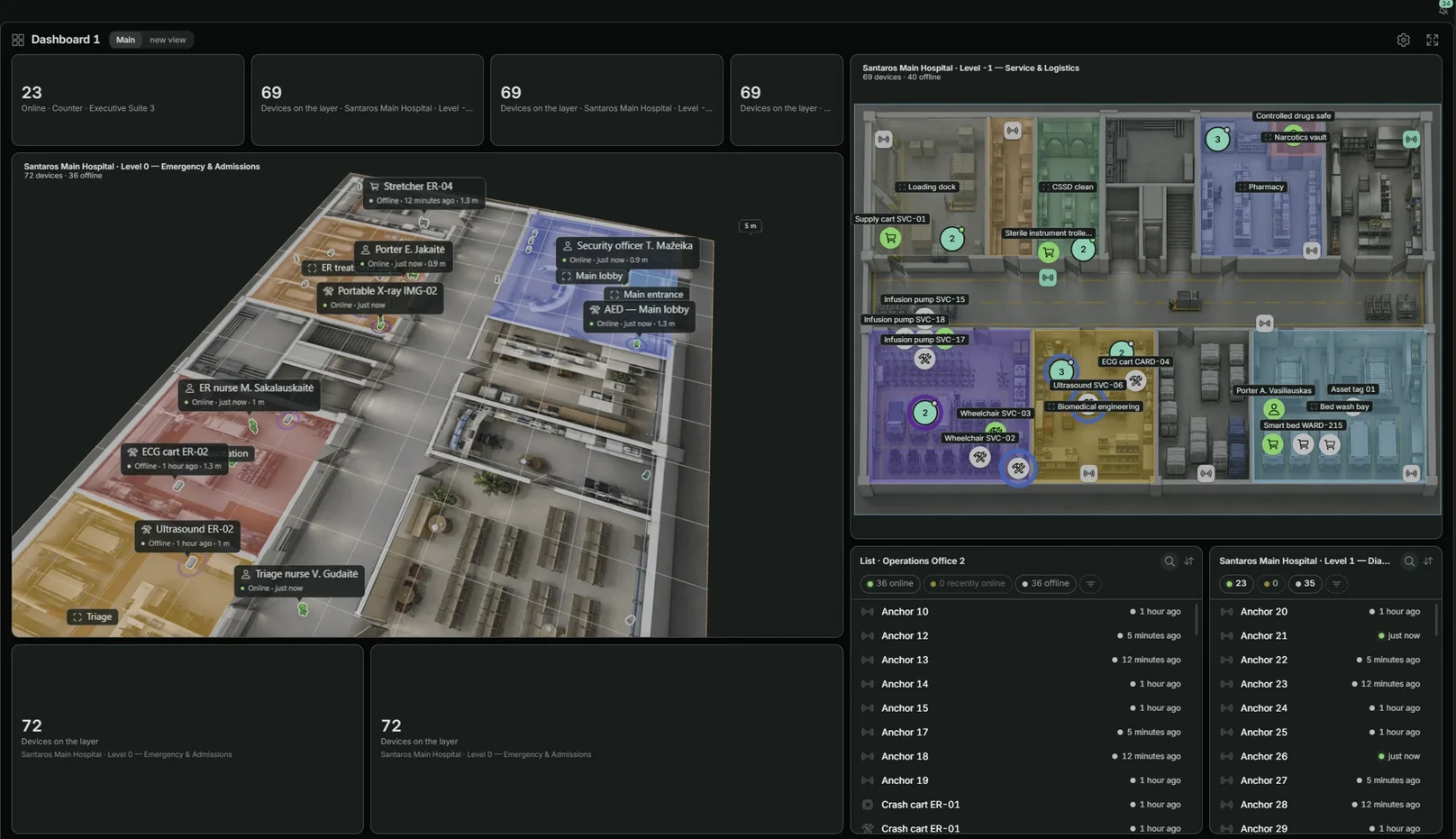
MeshPoint also built dashboards to monitor all floors and sensor counts per zone in real time, set up three-level loss-of-connection alerts, and used the history in Tags to replay any sensor’s movements.
How the deployment went
Planning
MeshPoint planned each floor in its own planning tool, working from architectural drawings, and exported numbered anchor maps for installers. Anchors were spaced closer than coverage alone needs, to add data capacity, and gateways were placed densely to keep hop counts low.
The planning results for each floor:
| Floor | Area (m²) | Anchors | Spacing (m) | Planned accuracy (m) |
|---|---|---|---|---|
| A | 747 | 39 | 4.4 | ±1.5 |
| B | 2,301 | 86 | 4.9 | ±1.7 |
| C, incl. tents | 2,561 | 93 | 3.9 | ±1.4 |
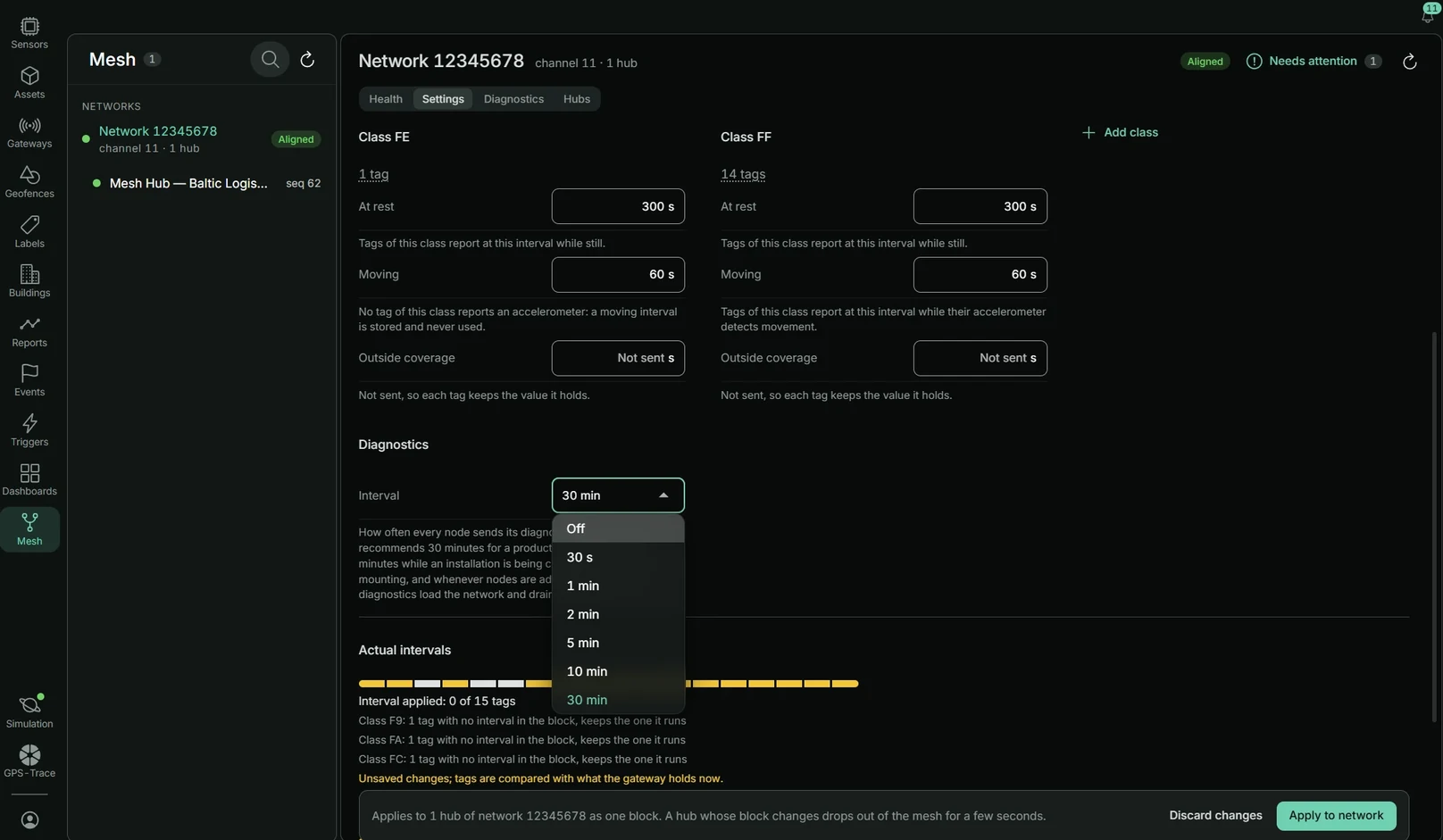
Wirepas low latency mode was not available, so capacity came from density. The diagnostics interval was raised from 10 to 30 minutes, with a command sent from Tags, to save airtime.
Pilot and load test
Before installation, the team packed 150 sensors into one container. Reception was 100% at rest and 97–99% in motion, but dropped to ~70% without an anchor near the cluster. That set the design: ceiling anchors at about 4 m and a gateway roughly every 15 m.
Installation and go-live
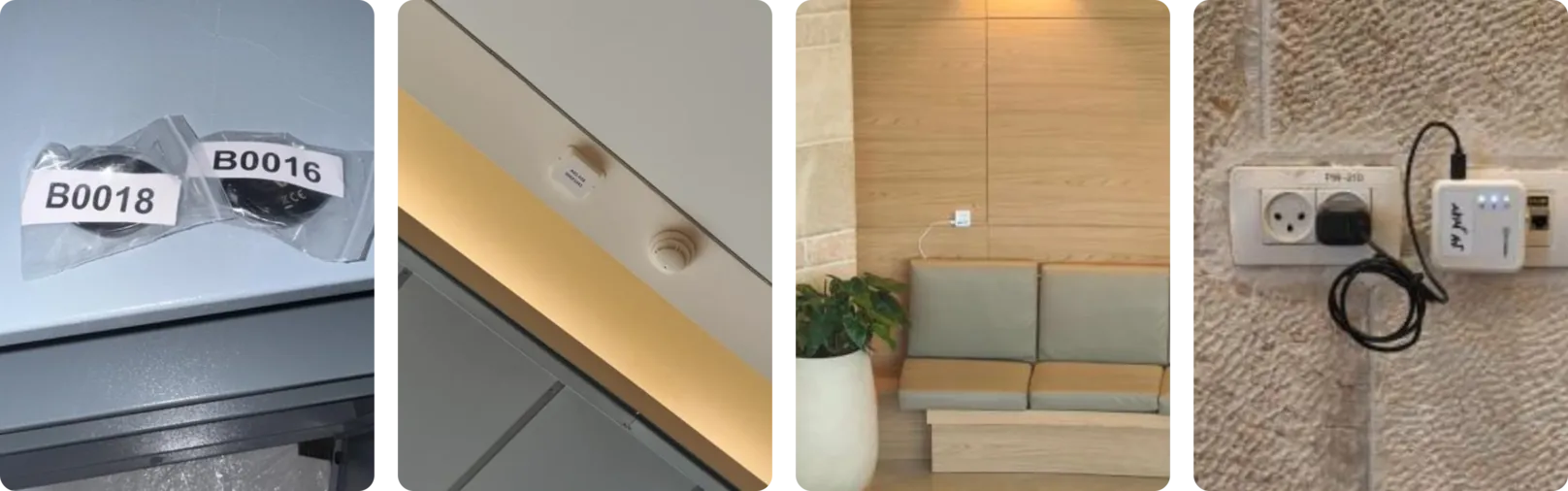
Installation took four days, with every anchor labelled by its plan number and device ID. All devices were created in the Tags account and switched on two days ahead, leaving time to deal with the few that failed.
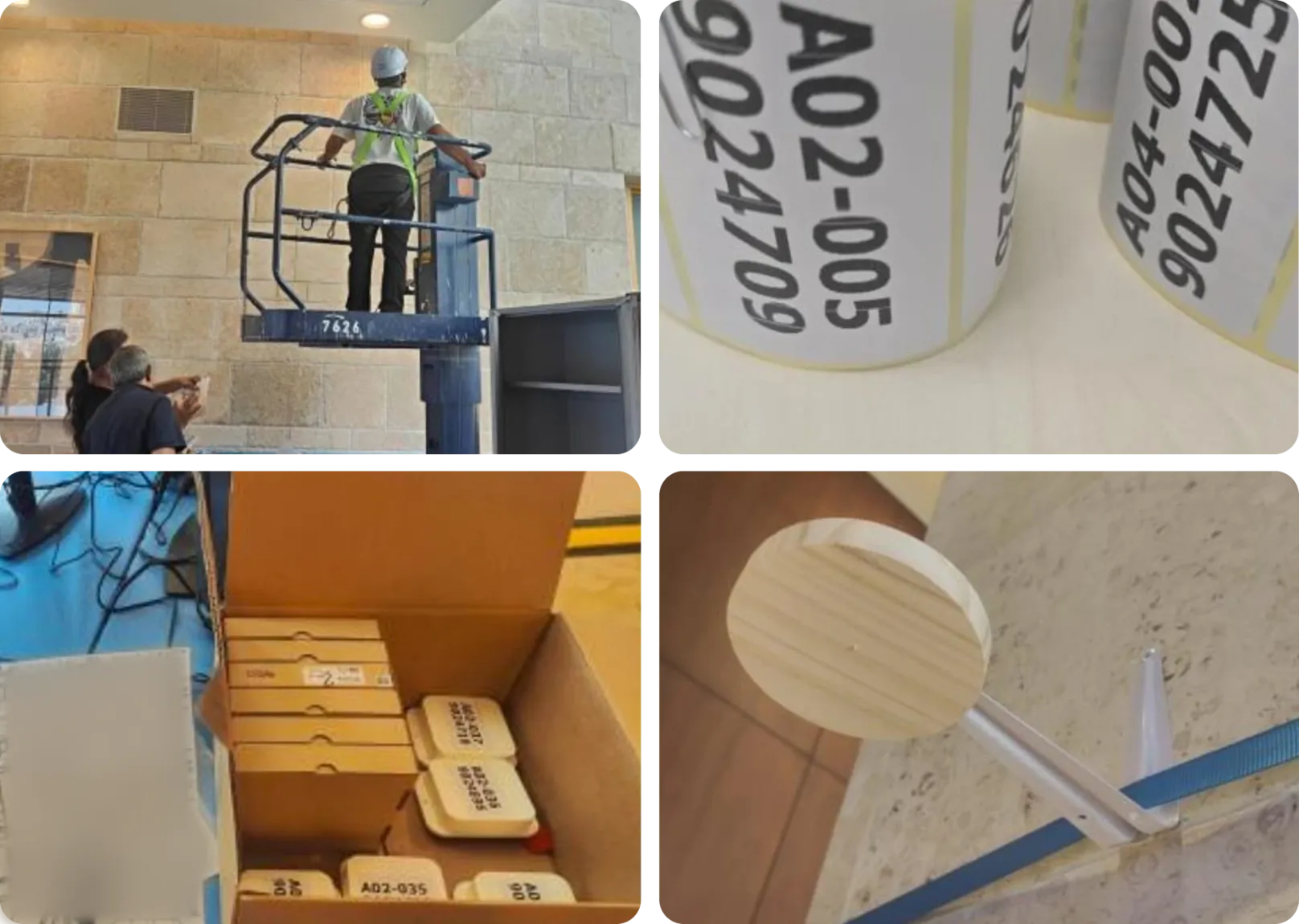
On the day, a five-person monitoring center followed the whole network in real time.
Network diagnostics
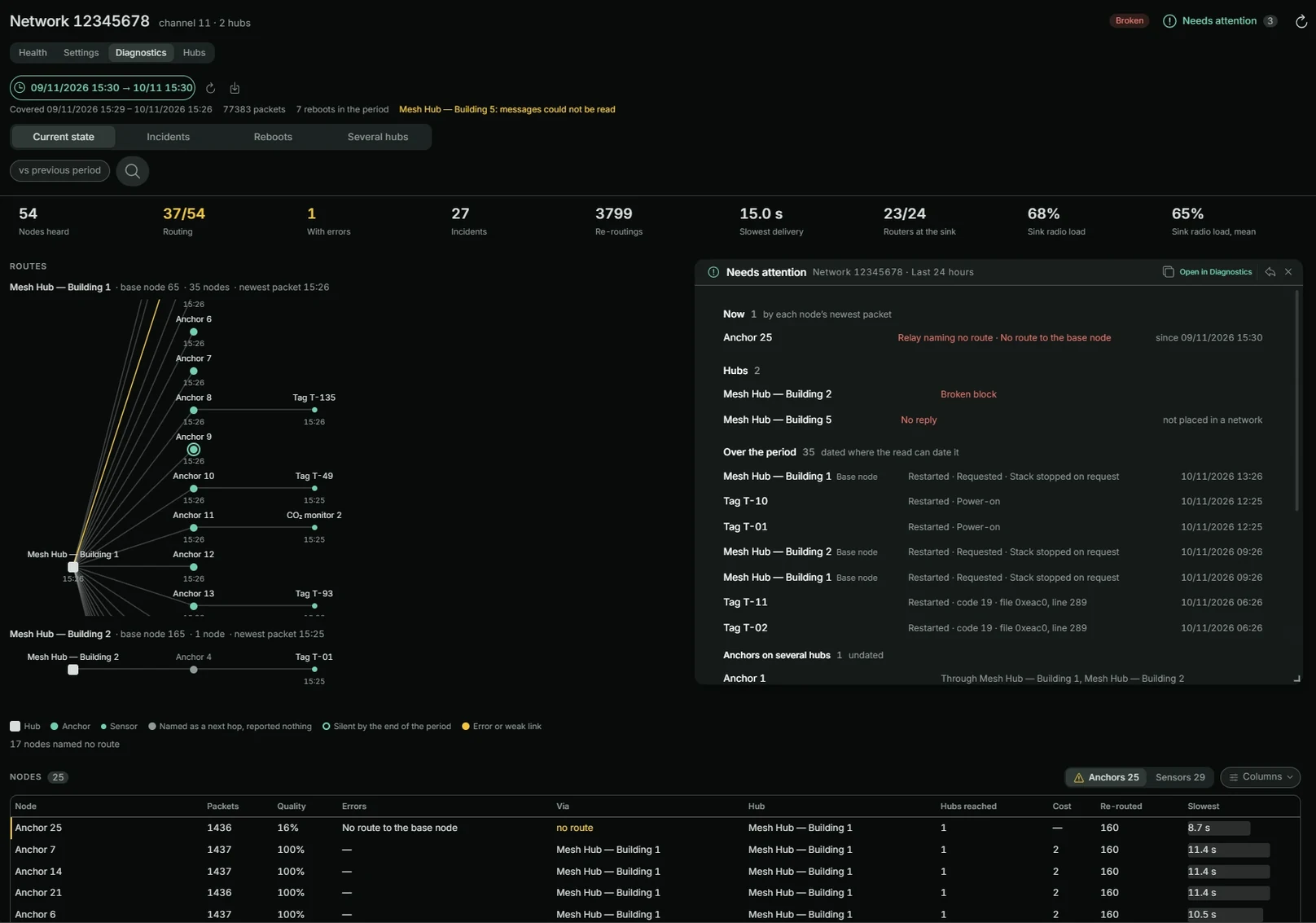
During setup and throughout the operation, the MeshPoint team used network diagnostic tools in GPS-Trace Console and Tags to spot issues early and resolve them quickly.
Among the issues they caught were:
- gateways losing WiFi or power
- sensors and anchors registered but not powered on
- ID registration errors
- network load and bottlenecks
Results
The network carried the full sensor population at high density for an entire operational day. The site-wide count held at 2,493 sensors throughout, with only isolated losses.
In MeshPoint’s words
GPS-Trace and its team were true partners in this project. They listened, adopted the needs we raised along the way, and their network diagnostics helped us catch problems before and during the operation. Without their support, we couldn’t have achieved what we did.